UB-78
The history, wartime service and wreck site of UB-78
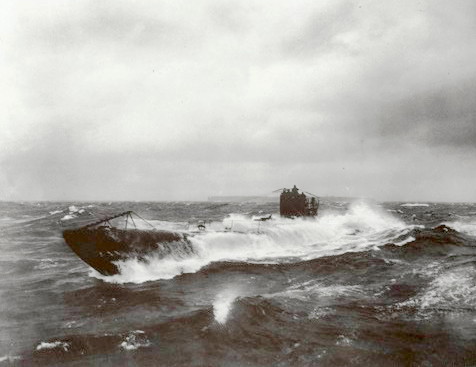
Unlike HMS Prince Leopold, whose story ended in the Second World War, UB-78 belonged to an earlier conflict. She was one of Germany's Type UB III coastal submarines, built for the Imperial German Navy during the First World War. Although her operational career lasted only a matter of months, she was lost with all hands while attempting to pass through one of Britain's most formidable anti-submarine defences: the Dover Barrage.
Construction
UB-78 was built by Blohm & Voss in Hamburg as part of the UB 75–79 production batch for the Kaiserliche Deutsche Marine, the Imperial German Navy. Ordered on 23 September 1916, she was laid down as yard number 307 before being launched on 2 June 1917.
Like the rest of her class, UB-78 measured just over 55 metres in length, displaced around 516 tonnes on the surface, and was powered by diesel engines for surface running with electric motors when submerged. She carried both torpedoes and a deck gun, making her a versatile weapon in Germany's campaign against Allied shipping.
Wartime service
UB-78 entered service during the final year of the First World War, when Germany had resumed unrestricted submarine warfare in an effort to cut Britain's maritime supply lines. By this stage of the conflict, Allied convoys were heavily protected and the English Channel had become one of the most dangerous stretches of water for German submarines.
Operating from the German bases in occupied Belgium, U-boats had to negotiate the increasingly sophisticated Dover Barrage—a combination of minefields, anti-submarine nets and constant naval patrols designed to prevent submarines entering the Channel.
UB-78's operational career proved to be remarkably short. In April 1918, while attempting to pass through the Dover Barrage at the beginning of a war patrol into the English Channel and Western Approaches, she was lost with all hands. Although the precise circumstances remain uncertain, the submarine is believed to have struck the British defensive system before ever reaching her patrol area.
The wreck today
Today, UB-78 rests in around 23 metres of water off Folkestone, Kent, where she has become a well-known dive site and an important First World War archaeological site.
The wreck lies in two distinct sections. The main hull, extending from the bow to the engine room, remains largely upright, although it now lists noticeably to port. A detached stern section lies just a few metres away, rotated through approximately ninety degrees and resting on its port side. The submarine's corroded keel remains clearly visible, allowing much of her original shape to be recognised more than a century after her loss.
Although salvage operations removed the propellers and some external fittings many years ago, archaeological surveys have shown the wreck to be in remarkably good condition. No evidence of human remains has been recorded, and the principal threat to the site today is the slow, natural process of corrosion rather than human activity.
A detailed survey undertaken by Wessex Archaeology in 2014 concluded that UB-78 survives as one of the better-preserved examples of a First World War German submarine in British waters. While not currently protected by designation, the report considered the wreck to possess considerable historical and archaeological significance, reflecting both the evolution of submarine warfare and Britain's efforts to counter the U-boat campaign in the English Channel.
Further reading
The wreck has been the subject of a detailed archaeological assessment commissioned by Historic England:
Wessex Archaeology. UB-78, off Folkestone, Kent: Archaeological Report (2015).
Explore the wreck location
Open UB-78 directly on the wrecksite map
Zoom to UB-78