U-1195 and SS Cuba
The history, wartime service and wreck site of U-1195 and SS Cuba
Few wrecks tell a complete story, but lying beneath the eastern Solent are two vessels forever linked by the final weeks of the Second World War. On 6 April 1945, the German submarine U-1195 torpedoed the troopship SS Cuba as she returned towards Southampton. Within hours, the Royal Navy destroyer HMS Watchman hunted the submarine down and destroyed it with one of the last successful anti-submarine attacks of the war. Today, both wrecks remain on the seabed only a few miles apart, preserving the final chapter of a dramatic encounter fought just a month before Germany surrendered.
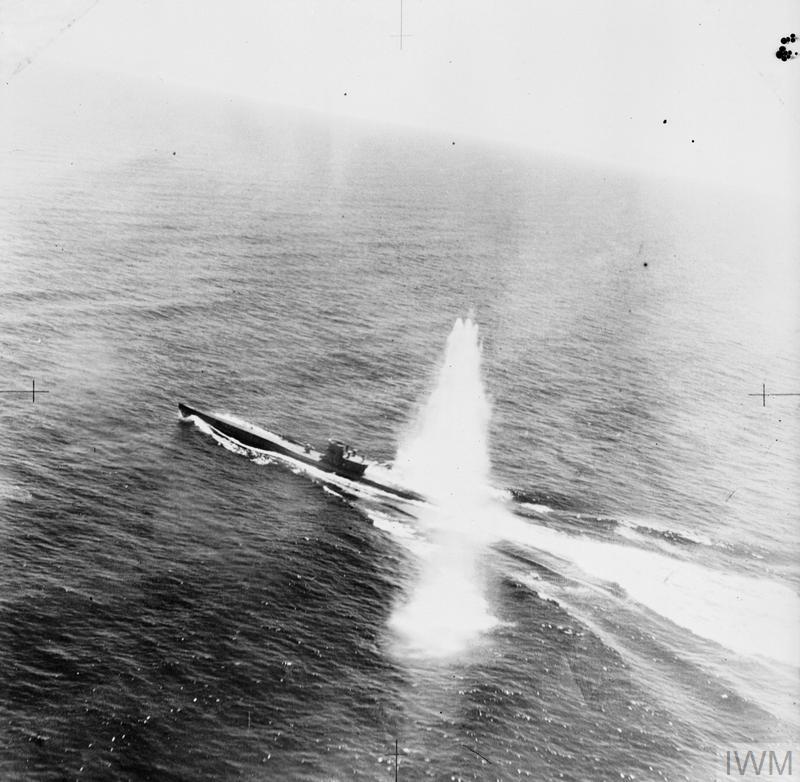
U-1195
U-1195 was a Type VIIC U-boat, one of the most numerous and successful submarine designs operated by the Kriegsmarine during the Second World War. Commissioned in November 1943, she entered service too late to influence the Battle of the Atlantic and completed only a single operational patrol. Her brief combat career nevertheless claimed two Allied ships: the American Liberty ship John R. Park in March 1945, followed by SS Cuba just over two weeks later.
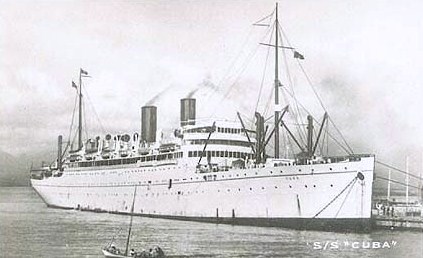
SS Cuba
Long before the war, SS Cuba had enjoyed a very different life. Built on Tyneside in 1923 for the French Line, she was a large passenger liner carrying travellers between France, the Caribbean and Central America. With luxurious accommodation for hundreds of first-class passengers, she represented the elegance of inter-war ocean travel.
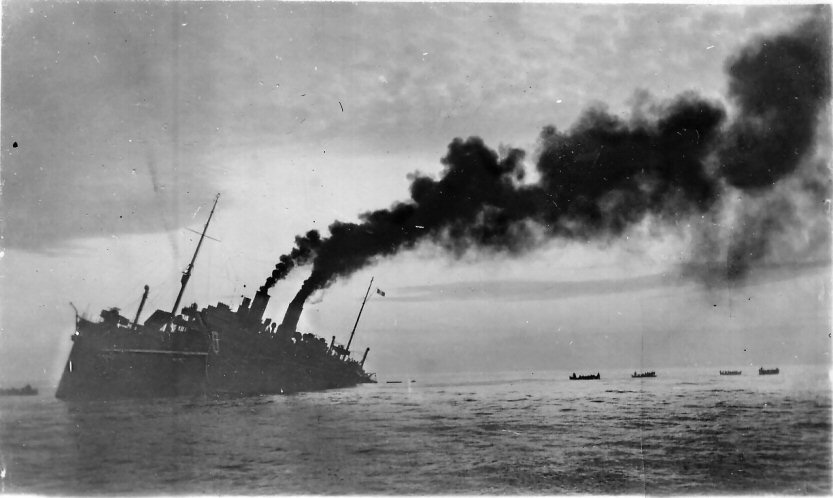
Following the fall of France in 1940 she was seized by the British, transferred to the Ministry of War Transport and converted into a troop transport. By April 1945 she was carrying only a small number of military personnel while returning to Southampton from Le Havre when disaster struck. A single torpedo from U-1195 hit the ship shortly after dawn. One crew member was killed, but the remaining crew and passengers were successfully rescued.
HMS Watchman's response
The attack on SS Cuba lasted only moments. The response was almost immediate.
Escorting the convoy was the veteran destroyer HMS Watchman, by then serving as a long-range escort equipped with the Royal Navy's innovative Hedgehog anti-submarine mortar. Rather than dropping explosives blindly astern like conventional depth charges, Hedgehog projected a pattern of contact-fused bombs ahead of the ship, allowing an attacking destroyer to strike a submerged submarine before it had time to escape.
Lieutenant Nick Mead, serving as Watchman's First Lieutenant, ordered an immediate counter-attack. According to contemporary accounts, the first Hedgehog salvo struck home, followed by depth charges. U-1195 was destroyed with the loss of thirty-two of her crew, including her commanding officer Ernst Cordes. Eighteen survivors were rescued. It was one of the final U-boats sunk in British waters before the end of the war.
The wreck today
The remains of U-1195 lie in approximately 34 metres of water. Modern bathymetric surveys clearly show the outline of the submarine resting proud of the seabed, while diver footage reveals damage consistent with the violent attack that ended her service.
A few miles away lies SS Cuba. Although dispersed by the Royal Navy in 1959 and later salvaged, surveys have shown substantial remains extending across roughly 165 metres of seabed. Anchors, portholes, lamps and other fittings have all been recovered over the years, while the wreck itself continues to stand as a reminder of one of the final merchant ships lost in the Channel during the war.
Further reading
The Maritime Archaeology Trust have published a detailed history of U-1195, SS Cuba and HMS Watchman.
Maritime Archaeology Trust – U-1195, SS Cuba and HMS Watchman (PDF)
Explore the wreck location
Open U-1195 directly on the Wrecksite map.
Zoom to U-1195Explore the wreck location
Open SS Cuba directly on the Wrecksite map.
Zoom to SS Cuba