Guillemot
The South Arklow lightship that warned approaching ships about a German U-boat — and was sunk for it.
On 28 March 1917 the South Arklow lightship Guillemot was at her usual station off the east coast of Ireland when her crew found themselves watching a German U-boat at work.
The submarine was UC-65, commanded by Otto Steinbrinck, and several ships had already been attacked around the Arklow Bank that day. Guillemot was anchored, unarmed and going nowhere, but her crew could at least warn other ships coming into the area.
So they did.
Warning the ships
One of the surviving letters from the incident was written afterwards by James Roseveare Martin. He describes seeing a steamer approaching while the submarines were nearby and having to decide quickly what signal to make.
He initially considered flying “J.D.” — standing into danger — but worried that the steamer would assume he was simply warning her about the bank.
Instead he made another warning signal.
It worked, but it also appears to have attracted the attention of UC-65.
UC-65 comes alongside
At about 6.10 that evening the submarine came alongside Guillemot. The Germans boarded the lightship, searched her for confidential material and then ordered Martin and the other six members of the crew into their boat.
Once they were clear, charges were placed aboard the lightship and detonated.
Guillemot didn't sink.
UC-65 eventually had to use its deck gun to finish the job.
Nobody from the lightship was killed, but Guillemot went to the bottom in around 50 metres of water, about 18 kilometres south-east of Arklow.
“I would do the same”
Martin's letter afterwards is wonderful. He had apparently been concerned that his decision to signal the approaching steamer might be questioned, and spends much of it explaining exactly why he did it.
He wasn't especially repentant.
“my duty as a British Sailor was plain. I would do the same in like circumstances”
He believed his actions had saved shipping and lives, and pointed out that he had been sitting on an anchored lightship with a German submarine close enough to see exactly what he was doing.
Towards the end he puts it rather more simply:
“I took my life in my hands to help to keep the Flag.”
He also hoped the Admiralty might see its way to recognising what he and his crew had done.
The lightship
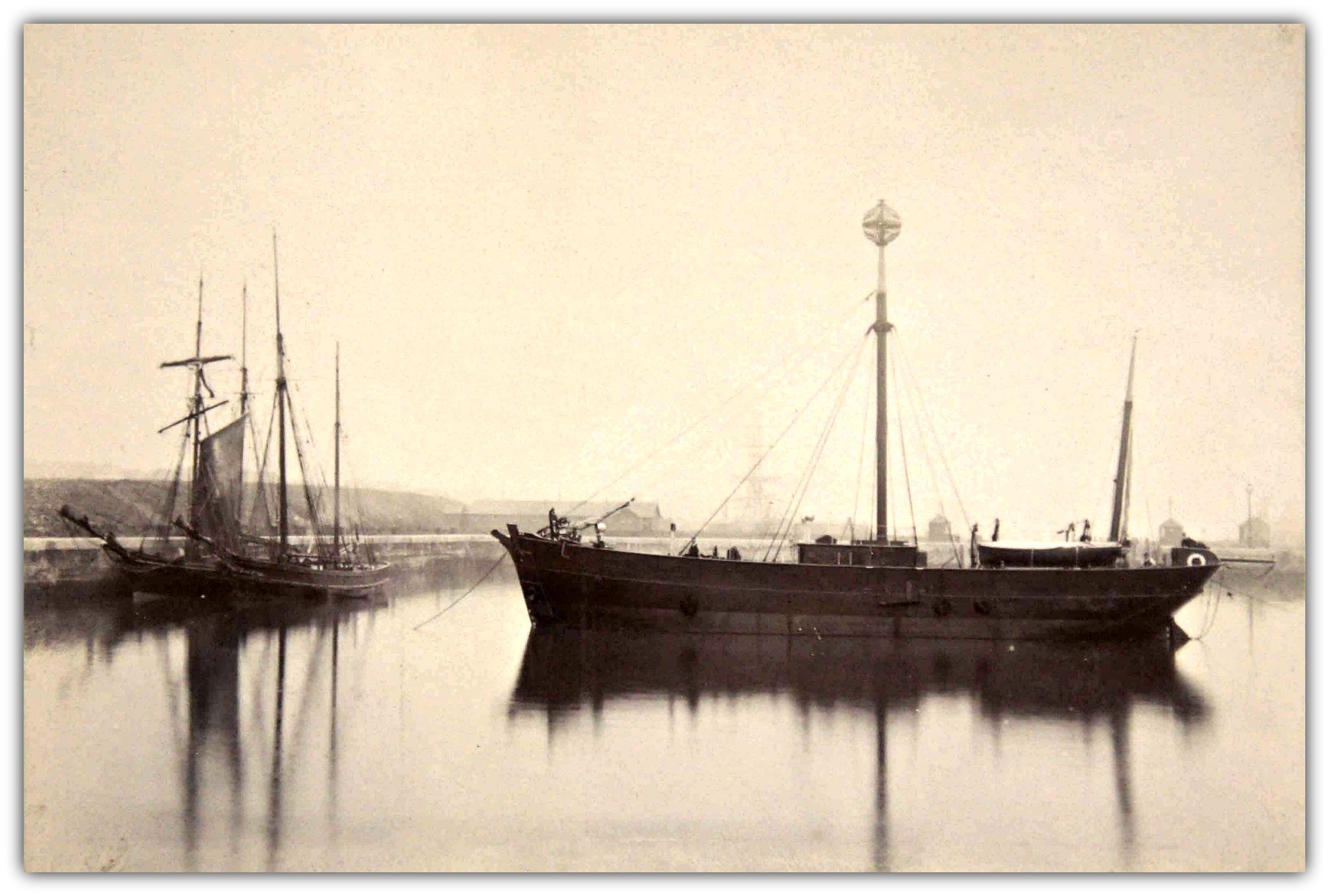
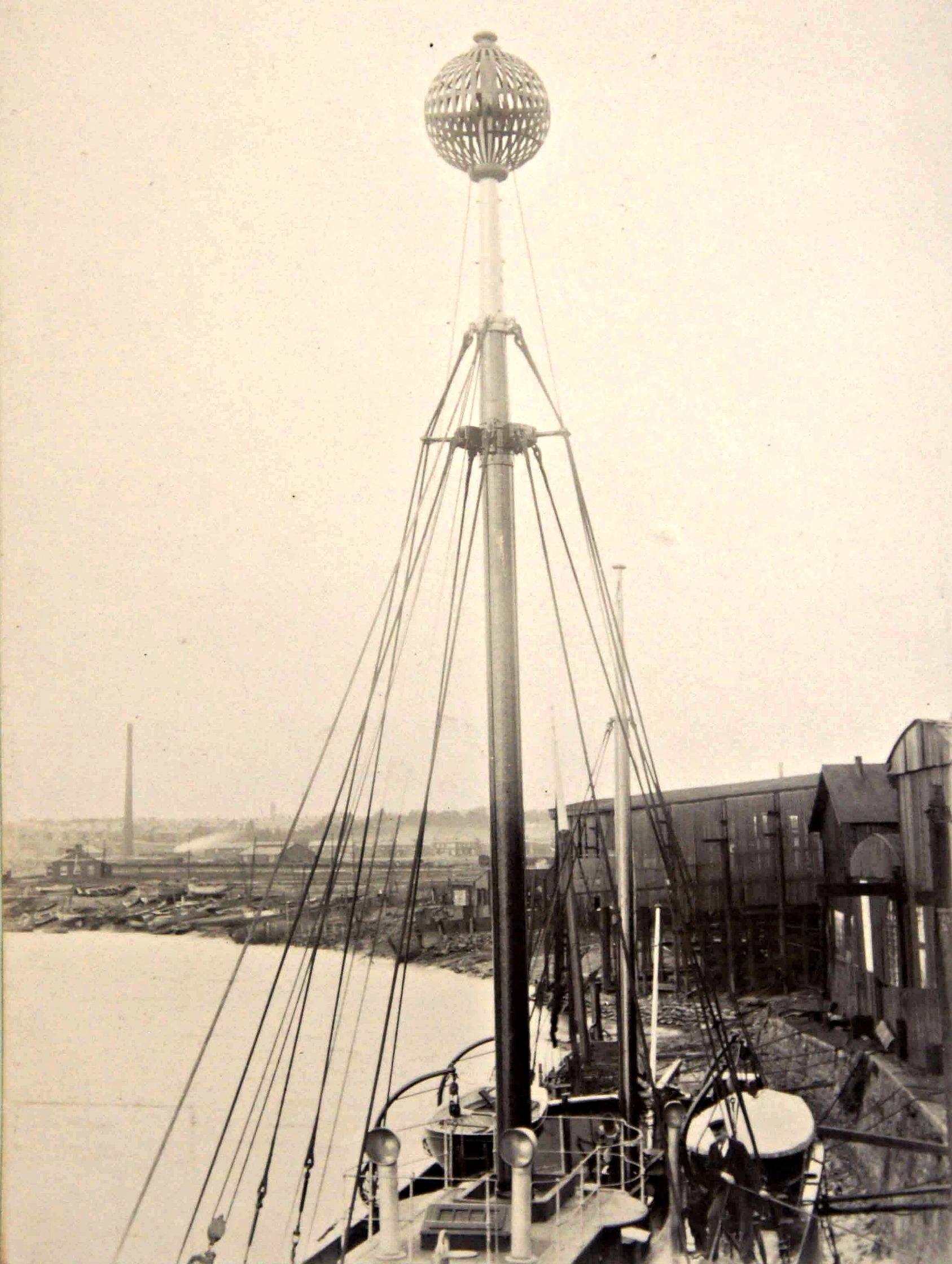
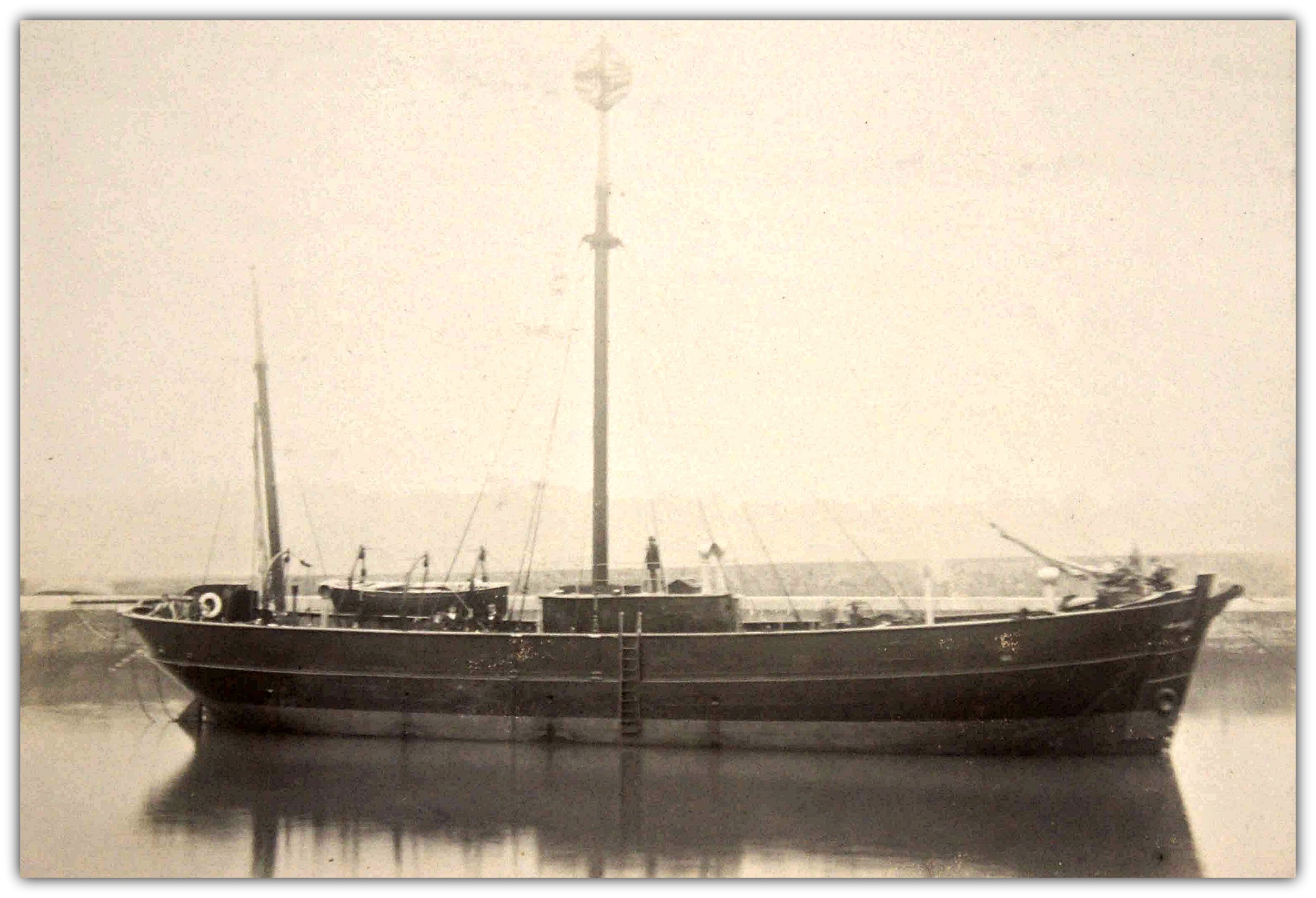
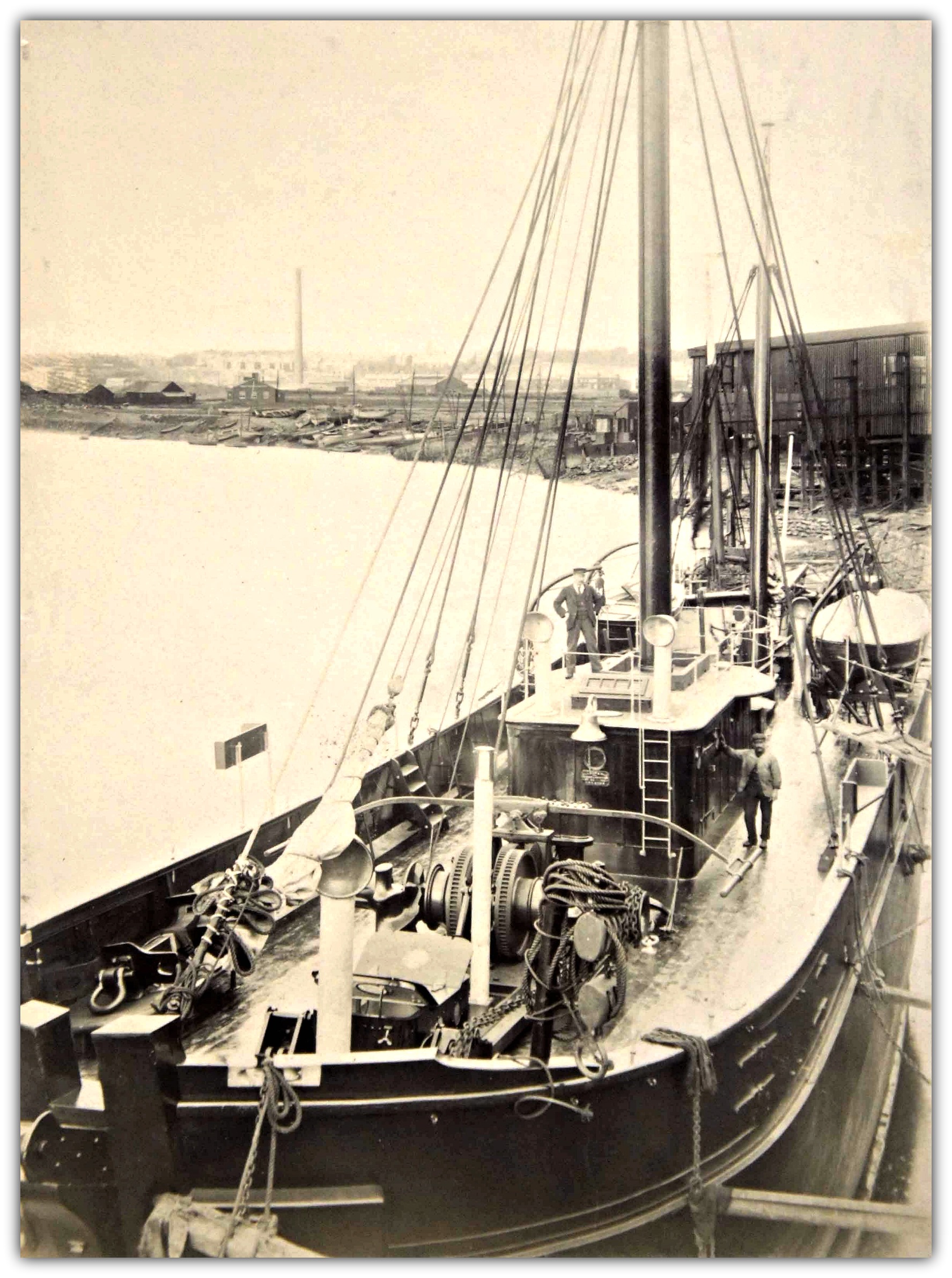
The photographs on this page date from around 1894 and were taken at William Allsup & Sons in Preston, where Guillemot was built the previous year. The vessel shown is believed to be either Guillemot or her sister lightship Shearwater.
They give a particularly good idea of just how small these vessels were — and how exposed Martin and his six crewmen must have been when UC-65 appeared alongside.
Guillemot was only about 29 metres long, although she was very heavily built. Her riveted steel hull was sheathed in teak, with Muntz metal protecting the timber below the waterline.
That construction may explain why simply blowing her up wasn't enough.
The wreck
More than a century later, she is still surprisingly intact.
INFOMAR surveyed the wreck and found Guillemot sitting upright on the seabed, her hull still clearly defined.
Wreck: South Arklow Light Vessel Guillemot
Position: 52° 40′ 16.02″ N, 05° 57′ 33.17″ W
Depth: approximately 50 metres
Lost: 28 March 1917
It's an unusually direct connection between the wreck and the documentary record. We know why Guillemot was sunk, we have photographs showing what she — or her almost identical sister — looked like, and we have Martin's own account of what happened.
And his explanation for it doesn't really need improving:
“I was desirous of doing my Bit in my humble way.”
Survey and further information
The wreck information and seabed survey details used on this page come from INFOMAR and Geological Survey Ireland's South Arklow Light Vessel wreck information sheet.
View the INFOMAR wreck information sheet .
Historic photographs are from the Preston Digital Archive collection on Flickr. The vessel shown is identified as probably either Guillemot or Shearwater.
Explore the wreck
Open Guillemot directly on the Ireland wreck map and explore the surrounding seabed.
Zoom to Guillemot