HMSM Sidon
The history, wartime service and wreck site of HMSM Sidon
Not every wreck on the seabed was claimed by enemy action. Some are reminders that the greatest dangers at sea can come from within.
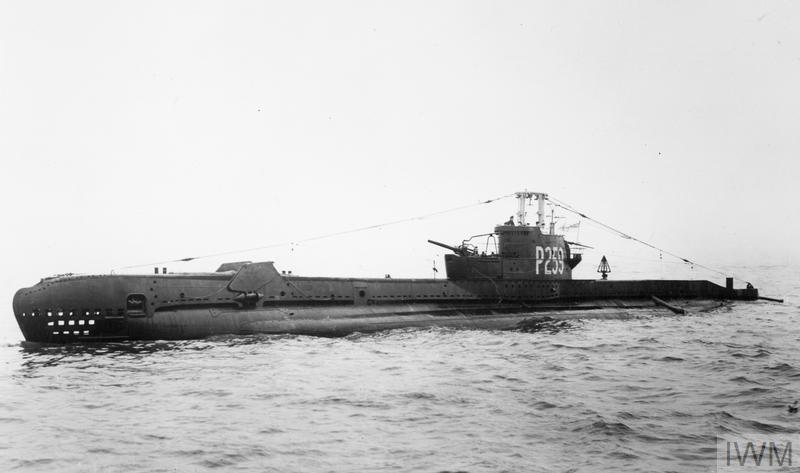
HMS Sidon was one of the Royal Navy's S-class submarines, launched in the final year of the Second World War. Although she saw wartime service in the Far East, she is remembered not for combat but for a tragic accident in Portland Harbour on 16 June 1955. An experimental torpedo exploded while still inside the submarine, killing thirteen men and causing Sidon to sink alongside her depot ship. Salvaged a week later, she was eventually scuttled off the Dorset coast in 1957 as an ASDIC (sonar) training target. Today she rests in around 36 metres of water and has become one of Britain's best-known submarine dives.
Wartime service
Built by Cammell Laird at Birkenhead, HMS Sidon was commissioned in November 1944, too late to make a significant impact on the course of the Second World War. After completing trials in British waters she deployed to the Far East, where she undertook patrols and air-sea rescue duties during the closing months of the conflict.
Her most notable wartime success came in July 1945, when she rescued the sole survivor of a crashed American Liberator bomber after five days adrift at sea. Following Japan's surrender, Sidon returned to Britain before spending the late 1940s and early 1950s in reserve, refits and training duties. She even appeared in the Coronation Fleet Review for Queen Elizabeth II in 1953, seemingly destined for a long peacetime career.
The Portland tragedy
That career came to an abrupt end on the morning of 16 June 1955.
Moored alongside the depot ship HMS Maidstone in Portland Harbour, Sidon was preparing for torpedo trials using a new High Test Peroxide (HTP) powered Mark 12 torpedo. At approximately 08:25, the torpedo suffered a catastrophic internal failure. Although its warhead did not detonate, the violent explosion burst open the torpedo tube, flooding the forward compartments with seawater while smoke and toxic gases rapidly filled the submarine.
Twelve men were killed instantly. A further casualty was Surgeon Lieutenant Charles Eric Rhodes of HMS Maidstone, who repeatedly entered the stricken submarine to assist survivors before succumbing to the fumes himself. Despite desperate rescue efforts, Sidon settled on the harbour floor less than half an hour after the explosion. Thirteen lives had been lost.
Salvage and legacy
The submarine was raised just one week later and beached on Chesil Beach, where the bodies of those who had died were recovered before burial with full naval honours.
A Court of Inquiry found no fault with Sidon's officers or crew. Instead, attention focused on the experimental HTP torpedo itself. The investigation concluded that a malfunction had caused the torpedo's motor to start inside the tube, allowing hydrogen peroxide to react violently within the weapon. The incident brought the Royal Navy's HTP torpedo programme to an end, and the design was withdrawn from service.
Two years later, on 14 June 1957, HMS Sidon was deliberately sunk off the Dorset coast to serve as an ASDIC target. Ironically, the submarine that had been destroyed while testing new underwater weapons would spend the remainder of her existence helping others learn to detect submarines beneath the sea.
The wreck today
Today HMS Sidon lies upright in approximately 36 metres of water off Portland. Although intentionally sunk, the submarine still bears the scars of the 1955 disaster. Numerous openings in the casing provide a glimpse into her interior, while decades beneath the sea have transformed the hull into an artificial reef supporting a rich variety of marine life.
The wreck is regarded as one of the finest submarine dives on the south coast. Standing on the conning tower and looking up through more than twenty metres of clear water towards the waiting dive boat is an experience many divers remember long after leaving the site. Beneath the marine growth and shoals of fish, however, lies a poignant reminder that HMS Sidon is not simply a training target or a dive attraction, but the final resting place of a tragedy that changed the course of British submarine safety.
Further reading
For a detailed history and primary sources check out:
Explore the wreck location
Open HMSM Sidon directly on the Wrecksite map.
Zoom to HMSM Sidon